0%

Choosing the right Bikini manufacturer in China takes more than comparing factory photos or quoted prices. Buyers need to understand what each supplier can actually produce, how clearly they communicate, and whether their capabilities fit the intended collection. This guide introduces manufacturers to consider and explains practical ways to assess them. No single supplier is best for every brand.

Useful comparisons begin with product details. Ask about fabric composition, lining, elastic recovery, print options, size grading, sample costs, and minimum order quantities. A well-made sample should feel secure at the seams, hold its shape after stretching, and match the approved color as closely as possible. Ask how the factory checks these details during production. Clear answers matter.

Look for evidence, not promises. Request recent product examples, sample timelines, and a written breakdown of development and production steps. Check whether the supplier can explain its experience with similar styles, rather than relying on a broad catalog. Small details reveal a lot. A slow or vague reply may signal communication problems later, though one missed message is not proof. I would not treat a polished website as verification; that is an easy mistake to make. Where possible, compare samples and confirm key specifications in writing. The following overview focuses on manufacturers through these practical lenses, helping readers shortlist partners with realistic expectations about quality, cost, and lead times.
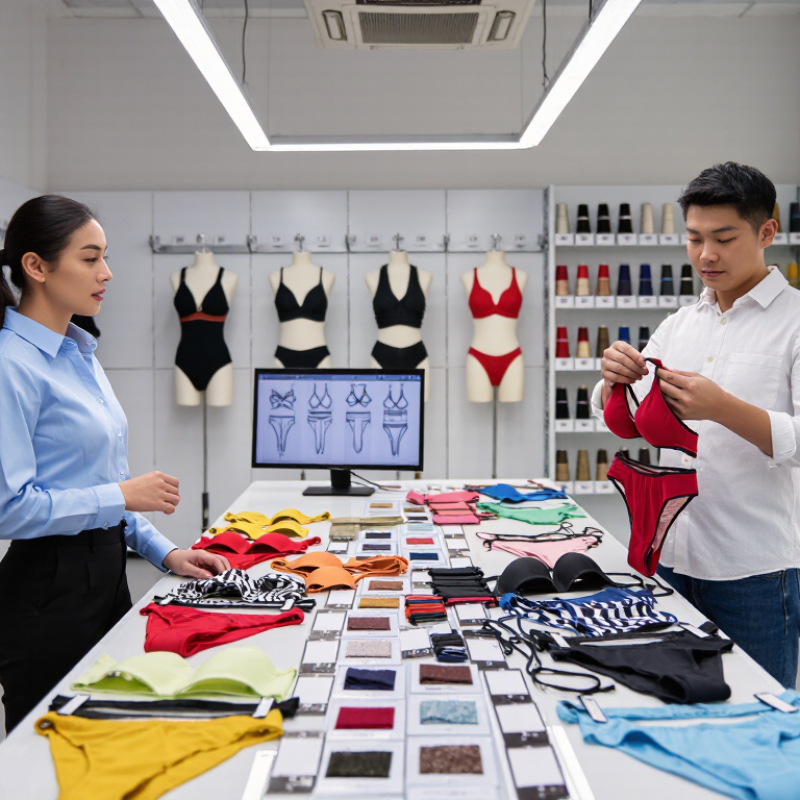
Who Are the Top Bikini Manufacturers in China?

Understanding China’s Bikini Manufacturing Industry

China’s bikini manufacturing industry combines fabric sourcing, pattern development, sewing, and finishing, though not every factory handles each stage in-house. Many suppliers work with nylon or polyester blends containing elastane. The exact fabric affects stretch, opacity, drying time, and resistance to chlorine or saltwater. A swatch feels different from a finished garment. Fit matters.

Production usually begins with a tech pack, measurement chart, and sample review. Skilled teams adjust pattern pieces for different sizes, then check seam tension, lining coverage, and elastic recovery. Small details matter. A twisted strap or uneven stitch can change how a swimsuit feels when wet, even if it looks neat on a table.

Factory capabilities vary, so buyers should ask about minimum order quantities, sample lead times, fabric certificates, and inspection procedures. Requesting a size-set sample can reveal grading issues before bulk cutting begins. During production, checks on measurements and stitching help catch problems early. Still, one inspection cannot guarantee every piece is identical. That limitation deserves honest discussion. Clear records, specific feedback, and repeat testing make cooperation more dependable, especially when materials or designs change between seasons.

Criteria for Ranking Leading Bikini Manufacturers

Ranking bikini manufacturers in China requires evidence, not polished catalog photos. A strong review checks swimwear production experience, sample accuracy, and repeat-order consistency. Small details matter. Inspect seam tension, lining coverage, elastic recovery, and print alignment across curved panels. Ask whether fabric certificates and inspection records can be traced to specific batches. Manufacturers should explain capacity and realistic lead times without promising everything.

Quality should be assessed through a documented sampling process and clear defect standards. Request a size set, then compare measurements after washing and gentle stretching. Check how the supplier handles corrections. Communication is measurable: replies should address technical questions, identify responsible contacts, and record changes. Look closely. Assess labor and environmental practices through verifiable policies or audit information, not vague claims. No single score tells the full story. Treat price and minimum order quantities as secondary criteria; low quotes can conceal inconsistent materials or rushed inspections. A limitation remains: factory visits and independent testing may not be practical for every buyer.

Criteria for Evaluating Bikini Manufacturers in China

Suggested evaluation framework, not a survey or ranking of specific companies. Adjust the weights to fit your product and sourcing priorities. Verify quality systems, compliance documentation, production capacity, material traceability, and sampling performance directly with each supplier.

Profiles of Notable Bikini Manufacturers in China

China’s bikini suppliers often differ more in production focus than in location. One notable profile is the cut-and-sew factory that handles pattern development, sampling, and bulk production under one roof. Its strengths may show in clean lining, even stitching, and straps that stay secure during movement. Ask to inspect seam finishes and fabric recovery after repeated stretching.

Another profile is the export-oriented manufacturer with experience grading patterns across several sizes. A careful team records measurements, checks shade differences between fabric rolls, and reviews samples before production. Small errors matter. A cup edge that sits smoothly on one sample may wrinkle in another size. Production records and clear sample approval steps offer more evidence than a sales claim.

Smaller specialist workshops may suit limited runs or detailed design changes, though capacity and lead times can vary. I would not judge any factory by a polished sample alone. Request a production sample, confirm who performs quality checks, and ask how defects are documented. That extra scrutiny can feel slow. It is useful when the final garment must fit consistently.

Comparing Products, Production Capacity, and Customization

Who Are the Top Bikini Manufacturers in China?

Chinese bikini manufacturers vary in fabric sourcing, production scale, and willingness to handle small custom orders. Some focus on core styles, such as triangle tops and high-waisted bottoms. Others offer more complex details, including adjustable straps, lining options, and custom prints.

Grand View Research estimated the global swimwear market at USD 20.7 billion in 2023. That figure shows demand, but it does not measure any factory’s output.

Capacity claims need careful checking. Ask suppliers for monthly output by product type, current lead times, and sample-to-bulk consistency. A large stated capacity may include several product categories, not bikinis alone. Compare fabric weight, stretch recovery, stitching, and color consistency on physical samples.

Customization also has limits: print development, recycled fabrics, and unusual trims can affect minimum order quantities and delivery schedules. I would not choose on price alone; one weak seam can undo a polished design.

Tips

Request a size-set sample and a written production timeline. Confirm who sources fabric and trims, and ask how defects are handled. Keep the first order manageable. It is easy to overestimate how much a new style will sell.

Evaluating Quality, Compliance, and Supplier Services

When comparing bikini manufacturers in China, evaluate documented process control, not just sample appearance. Ask for fabric composition records, lot-level inspection reports, and test results for colorfastness, seam strength, and stretch recovery. Textile Exchange’s Materials Market Report 2024 estimates that global fiber production reached 124 million tonnes in 2023, with polyester making up 57%. That scale makes material traceability worth checking, even for a small swimwear order. A glossy sample proves little about the next production batch.

Tips: Request a pre-production sample and a written inspection checklist. Confirm who pays for failed tests, and ask how defects are recorded and corrected. Keep the answers in writing.

Compliance and supplier service deserve equal scrutiny. Review factory audit scope, worker-safety procedures, and chemical-management records relevant to your destination market. Ask whether testing is done in-house or by an independent laboratory, and verify the report identifies the same fabric and color as your order. Check lead times for sampling, bulk production, and repeat orders; get clear minimum quantities and change-control terms. Fast replies help, but they are not proof of reliable production. Even a thorough audit can miss a rushed shift or an inconsistent subcontracting arrangement, so recheck key controls during production. Textile Exchange’s figures describe the fiber market, not swimwear performance; buyers still need product-specific evidence.

FAQS

What fabrics are commonly used for bikinis made in China?

Many suppliers use nylon or polyester blends with elastane. Fabric choice affects stretch, opacity, drying time, and resistance to chlorine or saltwater.

What information should I provide before sampling?

Prepare a tech pack, measurement chart, and clear design notes. A physical fabric swatch helps, but it may feel different from the finished garment.

Why request a size-set sample?

It can reveal grading problems across sizes before bulk cutting. Check cup edges, strap placement, and lining coverage.

Which details matter when checking a bikini sample?

Inspect seam tension, even stitching, print alignment, and elastic recovery. Try the garment after gentle stretching. Small flaws can feel larger when wet.

How can I assess quality during production?

Ask for measurement and stitching checks, documented defect standards, and traceable inspection records. One inspection cannot guarantee every piece matches.

What should I ask about fabric documentation?

Ask whether fabric certificates and inspection records link to specific batches. Vague claims are hard to verify.

How should I compare suppliers’ prices and lead times?

Confirm minimum order quantities, sample lead times, and realistic production capacity. A low quote may hide rushed checks or inconsistent materials.

Can a polished sample prove a factory will deliver consistent bulk orders?

No. Request a production sample and ask who checks defects and records corrections. I would not rely on appearance alone; that judgment can still miss things.

Conclusion

China’s Bikini manufacturing industry offers a wide range of production options, from standard swimwear to custom designs for different markets and customer needs. Choosing a leading manufacturer involves looking beyond price: buyers should assess product range, experience, production capacity, material options, and the ability to adapt styles, sizing, colors, and details. Comparing these factors can help identify suppliers suited to both small custom orders and larger production runs.

Quality and dependable service are equally important. A careful evaluation should consider workmanship, fabric consistency, quality-control procedures, relevant compliance practices, communication, lead times, and support throughout sampling and production. By weighing these criteria together, buyers can build a clearer picture of each supplier’s strengths and limitations, make informed comparisons, and select a manufacturing partner aligned with their product goals.

Amelia

Amelia

Amelia is a professional marketing specialist with a deep understanding of the company’s products, services, and customer needs. She regularly contributes expert articles to the company website, sharing practical insights, explaining product features, and helping readers make informed decisions.......