Custom Print / High-End

Precision-crafted patterns utilizing GRS-certified regenerated yarns, anti-pilling four-way stretch, and saltwater-resistant dyes. Select a production-ready model or request custom grade specifications.
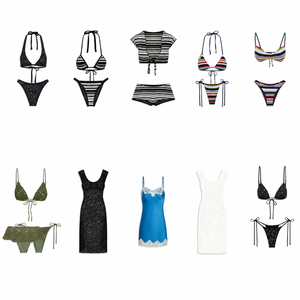





From 2D CAD computerized pattern design and in-house green printing to robotic precision cutting and finished parcel export to 70+ nations.
Our primary manufacturing hub leverages clean solar photovoltaic arrays yielding 90+ MWh annually. By drastically decreasing grid dependence, we help fashion brands offset direct Scope 1 and Scope 2 carbon footprint obligations under tightening global CSR regulations.
Equipped with state-of-the-art sublimation and digital reactive printers utilizing OEKO-TEX Class I certified water-based inks. Zero toxic wastewater discharge, hyper-vibrant 1200 DPI resolution, and zero cracking or fading across 50+ wash and UV tests.
Direct mill partnerships guarantee duty-free bonded inventories of genuine ECONYL® regenerated polyamides, REPREVE® post-consumer rPET, and LYCRA® Xtra Life™ elastane. We furnish formal Transaction Certificates (TC) with each bill of lading.
Traditional swimwear exporters demand 500 units per color per size. We empower niche disruptors: order as few as 20 pieces per style/color with complete liberty across your size scale (XXS to 4XL) to eradicate unsold deadstock liabilities.
Every garment undergoes a 4-tier inspection protocol: fabric elongation tension testing, pattern seam stress assessment, UV/chlorine immersion tests, and meticulous pin-hole needle detection before custom retail-ready packaging.
Full turnkey branding options: heat-transfer tagless silicon logos, chlorine-proof zinc alloy and brass hardware, 100% biodegradable cassava/tapioca bags, and FSC-certified unbleached seed-paper swing tags.
Navigating environmental supply chain mandates, regulatory transitions, and material innovations in high-performance beachwear.
Procurement professionals operating across the European Union, United States, and Australasia now face strict anti-greenwashing directives, such as the EU Corporate Sustainability Due Diligence Directive (CSDDD) and Extended Producer Responsibility (EPR) regulations. Global swimwear buyers are pivoting away from unverified "eco-friendly" claims toward immutable, transaction-certified material provenance. As an established Chinese exporter, we integrate mass-balance transaction certificates (TC) alongside digital chain-of-custody tracking. B2B buyers must partner with manufacturers whose recycled inputs match global laboratory standards (e.g., DIN EN ISO 14021) to prevent costly customs audits and border rejections.
The greatest technological bottleneck in swimwear life-cycle management has historically been the inability to mechanically separate high-percentage Elastane (Spandex) from base Polyamides and Polyesters. Emerging sourcing directives prioritize Monomaterial Design Engineering. We are collaborating with leading yarn manufacturers to adopt early-stage recyclable polyurethanes and chemically depolymerizable nylon structures. Brands that integrate recyclable thread, mono-polymer linings, and removable zinc hardware into their 2025/2026 collections will gain substantial competitive leverage as circular recycling infrastructure matures.
Unsold inventory represents both an economic write-down and an environmental catastrophe. Sourcing leaders are shifting from the obsolete "bulk gamble" model—placing 10,000-piece orders with 6-month lead times—toward responsive agile clusters. By utilizing localized fabric stocks, computer-guided knife cutting, and 3-day rapid prototyping, our agile manufacturing line enables buyers to launch low-run capsule series (100–250 units), validate regional market traction via DTC analytics, and rapidly restock trending SKUs within a 3-week window.
| Evaluation Parameter | Legacy Fast-Fashion Production | Our Circular Eco-Friendly System |
|---|---|---|
| Virgin Petroleum Content | 100% Virgin Nylon/Polyester | 0% Virgin Base; 100% GRS Recycled Post-Consumer Plastics & Ghost Nets |
| Printing Discharge | Heavy water discharge, non-biodegradable synthetic dyes | Zero-discharge digital sublimation; Non-toxic OEKO-TEX eco inks |
| Elasticity Durability | Degrades rapidly under UV & Chlorine (30-50 hours) | LYCRA® Xtra Life™ ensures 5x longer recovery life against degradation |
| Inventory Flexibility | Rigid 1,000+ unit MOQs with heavy size-split constraints | From 20 pcs/style with unrestricted size grading distributions |
| Chain of Custody | Fragmented supply chain; subcontracted tier-3 cut-and-sew | Direct single-roof fabrication with complete traceable export papers |
Discover where cutting-edge material science, digital customization, and ethical manufacturing meet.
While recycled PET and fishing nets address existing waste, next-decade swimwear will evolve toward plant-derived renewable monomers (derived from castor bean oil and non-food biomass), providing identical tensile recovery without non-renewable hydrocarbon precursors.
The transition from "downcycling" (bottles to bikinis) to true "fiber-to-fiber" circular loops. We are preparing our cut-and-sew lines to collect and compact post-industrial cutting scraps to be re-melted into raw polymer chips, eliminating cutting-floor waste.
Integrating 3D virtual body mapping reduces physical sample iterations by over 70%. Brands can test stretch parameters, pattern grading, and seam tension digitally before fabric is ever cut, saving weeks of transit time and shipping emissions.
Everything you need to know regarding minimum orders, testing, lead times, and international supply chain compliance.
For our pre-engineered Ready Design (white-label) collection, order minimums start at only 100 pieces total across the entire run. For custom private label OEM development (sketches, bespoke fits, custom tech packs), our minimum starts at 250 pieces. Crucially, we require only 20 pieces per style/colorway, with zero MOQ restrictions per size, giving you complete flexibility to optimize inventory across XS, S, M, L, XL, and plus sizing.
We provide complete material transparency. Our primary circular textiles originate from certified suppliers of ECONYL® (regenerated nylon made from discarded ghost fishing nets and carpets) and REPREVE® (recycled plastic bottles). With every export shipment, we supply authorized Global Recycled Standard (GRS) Transaction Certificates (TC) and OEKO-TEX Standard 100 Class I test documentation, certifying zero hazardous residues suitable even for infant skin contact.
Prototyping from our catalog designs requires approximately 3 business days. Custom digital pattern drafting and first fit samples take approximately 10 to 14 days. Once the pre-production sample (PPS) is formally signed off, bulk cutting, assembly, and automated QC require 4 to 8 weeks depending on order volume and print complexity. Rapid door-to-door international freight via DHL Express delivers finished goods worldwide within 4–5 business days.
Yes. We engineer bespoke, rust-free zinc alloy rings, sliders, logo pendants, and cord stoppers treated with marine-grade electroplating to resist oxidation from sea salt and swimming pool chlorine. For sustainable presentation, we offer customized heat-seal transfer tagless neck labels, biodegradable organic cassava polybags, and recycled hangtags with vegetable-based soy inks.
Before cutting bulk fabrics, we run dedicated 1:1 color strike-offs on your specified recycled base substrate to verify exact Pantone (PMS) or digital color-space reproduction. These are reviewed digitally under standard D65 lightbox conditions or air-mailed directly to your design studio for tactile approval.
Our enterprise operations strictly adhere to international fair labor standards. We maintain a living-wage policy, standard 40-hour workweeks with voluntary overtime compensation, robust health and social insurance coverage, and safe, well-ventilated, climate-controlled cleanroom facilities. We regularly facilitate third-party client factory inspections and audit verifications.
Whether launching your first eco-conscious capsule or transitioning an established retail line to certified circular materials, our manufacturing team delivers competitive pricing, technical precision, and certified quality.