Featured Padded Bikini Collections for B2B Sourcing
Engineered for anatomical lift, fast hydrophobic dry-out rates, and rigorous chlorine tolerance. Our production-ready silhouettes can be branded, re-engineered, or customized with distinct cup mold densities.
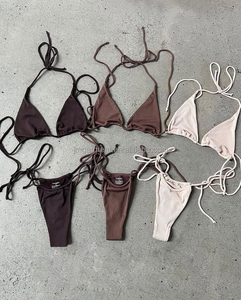
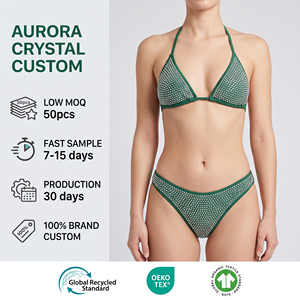
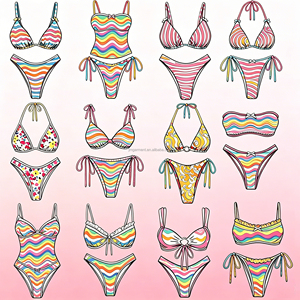
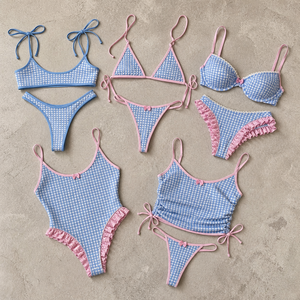
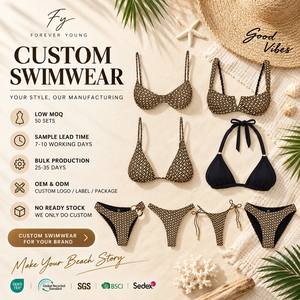
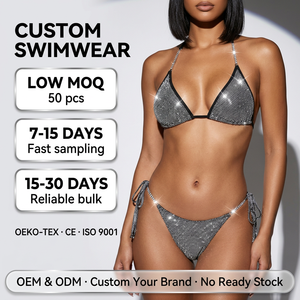


Anatomy of Padded Swimwear: Engineering Specifications & Cup Mold Technology
For independent brands, boutique retailers, and international resort collections, padding is not merely an aesthetic accessory; it is a complex intersection of hydrodynamic stability, thermal insulation resistance, and mechanical memory recovery. In standard consumer use, sub-par cups absorb excessive water volume, deform under hydraulic pressure, yellow from residual pool chlorination, and bunch inside the lining pocket after laundering cycles.
As an industrial-tier China wholesale padded bikini manufacturer, our facilities resolve these chronic failure points at the material formulation and heat-lamination stage. We operate clean-room thermal compression presses where polyurethane (PU) and open-cell polyether foams are heat-laminated to chlorine-resistant tricot knit linings under 0.4–0.6 MPa pressure at 180°C–195°C for precisely 120 seconds. This prevents delamination between the outer textile and the core foam substrate, even after prolonged exposure to saltwater, tanning oils, and thermal laundering.
Open-Cell Polyurethane Foam
Features an interconnected skeletal network that provides rapid airflow and moisture dispersion. Engineered with a low water retention coefficient, returning to baseline mass within 25 minutes of drying.
Micro-Perforated Breathable Inserts
Laser-perforated grids with 1.2mm venting apertures spaced across the cup arch. Maximizes water evacuation during active swimming or surf maneuvers, eliminating sagging and pocket bulging.
Multi-Density Ergonomic Push-Up
Graded graduated padding featuring high-density lower quadrants (45D) transitioning seamlessly into ultra-soft featherweight apex zones (25D) for natural contouring and zero harsh transition ridges.
| Padding Substrate Architecture | Specific Density (D) | Water Retention Rate (%) | Chlorine & UV Yellowing Resistance | Primary Commercial Application |
|---|---|---|---|---|
| Hydrophobic Perforated EVA | 30D – 35D | < 4.8% Water Uptake | Grade 4.5 / 5 (ISO 105-B02 Tested) | Athletic Active Swim, Surfing, Triangle Tops |
| Memory Rebound PU Foam | 40D – 48D | < 9.2% Water Uptake | Grade 4.0 / 5 (Anti-Yellowing Formula) | Plunge Bandeau, Structured Balconette Cups |
| 3D Spacer Warp-Knit Mesh | 50D Core Monofilament | < 3.1% (Extreme Rapid-Drain) | Grade 5.0 / 5 (Non-Foam Polymer) | Eco-Certified Circular Swimwear Lines |
| Liquid Silicone Gel Compound | 65D Encapsulated | 0.0% (Zero Absorption) | Grade 5.0 / 5 (Hermetically Sealed) | Luxury Push-Up, Red Carpet Resort Wear |
All padding configurations produced in our facilities comply rigorously with OEKO-TEX Standard 100 Class I (direct skin contact including infant-safe non-toxicity), verifying complete absence of formaldehyde, banned aromatic amines, and hazardous plasticizers.
Enterprise Factory Ecosystem: Why Global Swimwear Brands Scale With Us
Modern swimwear sourcing requires more than an assembly line; it requires technical agility, verified supply chain traceability, and strict process repeatability. In contrast to trading intermediaries that broker cut-and-sew orders through fragmented cottage workshops, our integrated manufacturing plants in China execute all developmental nodes under one roof: pattern digitization, automated laser nesting, sublimated digital printing, cup compression molding, high-gauge ultrasonic welding, and final four-needle six-thread flatlock assembly.
In-House 2D/3D CAD Grading
Patterns digitized on Optitex and Gerber systems ensure millimeter-precise fit across US, UK, EU, and AU anthropometric grading standards from XS to 5XL.
CNC Automated Fabric Cutters
Multi-ply computerized tensionless spreading tables and vacuum-stabilized CNC blade cutting eliminate edge fraying and maintain zero pattern stretch distortion.
Audited Social & Eco Standards
Fully compliant with BSCI, Sedex SMETA, and ISO 9001:2015 quality management. Recycled collections are fully traceable under GRS (Global Recycled Standard) 4.0 certification.
Zero-Subcontractor Assurance
Every single bikini set is sewn, assembled, inspected, and packed in our dedicated facilities. No third-party handoffs, guaranteeing batch-to-batch seam consistency.
Our raw material inventory features extensive direct relationships with premium yarn mills. We keep continuous yardage of high-gauge regenerated polyamides (such as ECONYL® and REPREVE®) blended with chlorine-immune LYCRA® Xtra Life™ elastane. This stock readiness reduces fabric acquisition lead times from typical 45-day industry delays down to immediate same-week sample cutting.
Strategic Sourcing Intelligence: The Future of Padded Bikini Procurement (2026–2030)
The global swimwear market is experiencing tectonic structural shifts driven by heightened consumer demands for sustainability, size inclusivity, and multi-functional resort-to-street wearability. Apparel brand founders and procurement directors must align their supply chain contracts with upcoming industrial trajectories to safeguard operating margins and customer lifetime value (LTV).
Circular Recyclability & Mono-Polymer Tops
Historical swimsuits combined nylon shells, polyurethane foam cups, and polyester thread, making end-of-life mechanical recycling impossible. The industry is rapidly pivoting toward mono-material assemblies where outer knit, internal padding (3D spacer knit), and stitching threads share an identical chemical base (100% Recycled PET or 100% Polyamide 6), enabling direct closed-loop re-polymerization.
Bio-Based Polyols & Plant-Derived Foams
Pioneering factories are phasing out crude-oil petroleum polyols in molded swimwear cups, substituting them with castor bean oil and bio-succinic acid formulations. These next-generation bio-foams reduce the manufacturing carbon footprint by 38% while delivering equal or superior hydrolytic stability and resilience under chlorinated pool testing.
On-Demand Micro-Batch Customization
Inventory overstocking remains the primary hazard for swimwear retailers. The future belongs to hybrid procurement models: launching core bestsellers with production-ready white-label blocks (MOQ 100) while deploying localized automated digital print-on-demand for capsule runs, eliminating unsold deadstock while maintaining high margins.
Brands targeting North American and European premium markets must verify factory compliance with upcoming EU Digital Product Passport (DPP) guidelines by confirming GRS transaction certificates (TC) for both the face fabric and internal cup lamination layers.
B2B Buyer's Technical Cost Decomposition & On-Site Quality Control Checkpoints
When negotiating FOB or DDP contracts with Chinese swimwear manufacturers, buyers should understand where manufacturing dollars are deployed. True cost transparency prevents unexpected supplier price markups while highlighting the difference between commercial fast-fashion products and premium boutique garments.
| BOM Cost Component | Typical Share (%) | Critical Quality Determinants | Common Factory Failure Modes |
|---|---|---|---|
| Face & Lining Shell Fabric | 35% – 42% | 190–240 g/m² weight; 4-way stretch modulus; LYCRA® Xtra Life™ inclusion | Substituting cheap spandex causing seam blowout and opacity loss when wet |
| Padded Cup Mold & Core | 12% – 18% | 35D–45D open-cell foam; anti-yellowing stabilizers; ultrasonic sealed perimeter | Using raw craft foam causing permanent crease lines and yellowing under UV |
| Cut, Make & Trim (CMT) Labor | 22% – 28% | Four-needle six-thread (ISO 607) flatlock; bar-tacking on stress points | Skipping seam lock-stitches; wavy uneven edges along cup perimeter channels |
| Hardware & Branding Trims | 8% – 12% | Zamak zinc-alloy rust-free hardware (24h salt spray tested); tagless heat transfer | Cheap electroplated nickel coating that corrodes and causes skin contact dermatitis |
| Packaging & QC Assurance | 5% – 8% | Biodegradable cassava/frosted poly bags, AQL 2.5/4.0 inspection, carton burst strength | Moisture retention in shipping boxes resulting in fungal mildew during sea freight |
Essential In-Line Quality Control (IQC & FQC) Protocols: During production runs, every batch of padded bikini tops is subjected to the following testing suite prior to packaging release:
- Hydrolytic Stability Test: 48 hours submerged in 50°C chlorinated water (20 ppm active chlorine) to inspect foam cup adhesion and fabric colorfastness (ISO 105-E03 standards).
- Compression Recovery Hysteresis: Cups compressed to 30% original thickness for 24 continuous hours, measuring rebound recovery within 60 seconds (must achieve >98% original cup shape profile).
- Salt Spray Chamber Testing: Metallic rings, sliders, and decorative chains exposed to 5% neutral salt fog for 48 hours per ASTM B117 to guarantee 100% rust-free maritime durability.
- Needle Detection & Foreign Metal Scanning: 100% passage through conveyorized magnetic sensitivity heads (0.8mm Fe calibration) to ensure consumer safety.
Frequently Asked Sourcing & Manufacturing Questions (B2B FAQ)
Clear, direct guidance from our chief production engineering team to assist startup founders, wholesale importers, and sourcing managers.