Ready Design 2025
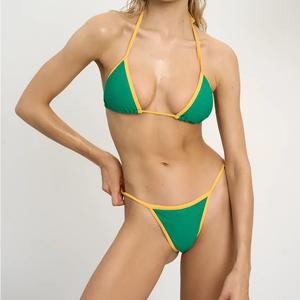
Engineered for immediate private label branding or foundational reverse-engineering. Graded across full international size spectrums with certified chlorine and saltwater resilience.
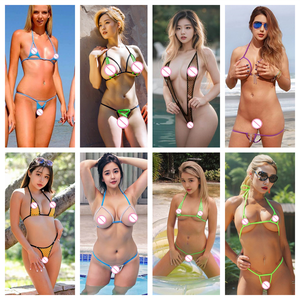
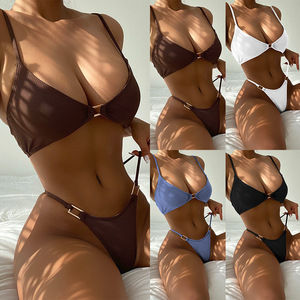
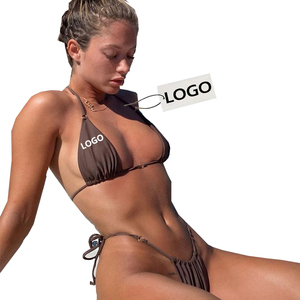

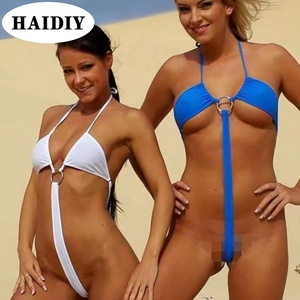
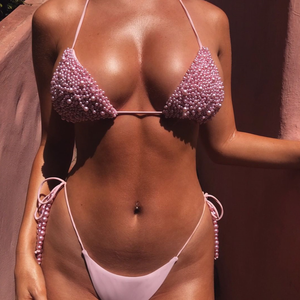

Determining the operational boundary between private label customization and full-stack bespoke development is critical to unit economics, inventory velocity, and capital efficiency.
| Evaluation Parameter | White Label / ODM (Ready Designs) | Private Label / OEM (Custom Engineering) | Strategic Enterprise Benefit |
|---|---|---|---|
| Starting Tech Pack | Pre-validated blocks from Bali factory library | Raw sketches, reference garments, or CAD files | Zero pattern overhead vs proprietary brand exclusivity |
| Minimum Order Quantity | 100 pieces total (20 pcs/colorway) | 250 pieces total (20 pcs/style/color) | Optimizes capital exposure for early-stage test capsules |
| Pattern Development | Standard graded 2D CAD blocks (XS–XXL) | Bespoke digital grading & 3D body mapping | Flawless ergonomic fit repeatability between batch cycles |
| Sample Lead Time | ≈ 3 to 5 business days | ≈ 10 to 14 business days | Compresses time-to-market ahead of seasonal campaign drop dates |
| Fabric & Trim Sourcing | Stocked Italian Carvico, ECONYL®, & Crinkle | Custom yarn dye, custom knits, bespoke hardware molds | Direct mill access eliminates standard 6-week material delays |
| In-House Customization | Screen, heat-transfer labels, hygiene liners, tags | All ODM elements + custom metallurgy, jacquards, cutouts | High brand recall with retail-grade unboxing touchpoints |
In modern swimwear apparel commerce, brands frequently struggle with the trade-off between speed-to-market and proprietary fit architecture. At Balidao Swimwear Co., Ltd., we eliminate this structural friction by running a hybrid manufacturing infrastructure in Denpasar, Bali. OEM (Original Equipment Manufacturing) allows high-growth labels and luxury beachwear houses to commission fully bespoke patterns, unique ergonomic cuts, proprietary zinc-alloy hardware with PVD protective finishes, and tailored stretch ratios calibrated to specific target consumer demographics.
Conversely, our ODM (Original Design Manufacturing) track—often referred to as Ready Designs—leverages more than a decade of anthropometric fitting trials. We maintain a library of production-tested blocks designed specifically to minimize roll-over, side-creasing, and front crotch bunching. By choosing ODM, emerging direct-to-consumer (D2C) brands can apply custom placement sublimation prints with zero cylinder setup costs, install tagless heat-transfer neck tags, and package collections in certified cassava-root starch polybags, reaching landed inventory within weeks rather than quarters.
Unlike traditional trading brokers who subcontract cutting and assembly to disjointed third-party sweatshops, every garment bearing our stitch is developed, cut, inspected, and shipped under our single solar-powered roof.
Our core manufacturing hub in Denpasar operates on industrial rooftop photovoltaic arrays generating 92 MWh of clean electricity annually. We decouple luxury apparel manufacturing from fossil-heavy municipal grids, delivering verifiable ESG metrics for sustainability-focused brands.
Fit inconsistencies ruin apparel brands. We convert physical references and design flats into millimeter-accurate 2D CAD files. Master pattern blocks are graded systematically across Australian, European, and North American sizing metrics, ensuring flawless fit consistency across repeat purchase cycles.
We maintain on-site inventories of authenticated Carvico VITA (78% ECONYL® regenerated nylon / 22% elastane), Jersey Lomellina, and high-gauge eco-crinkle knits. Sourcing directly from Italy under duty-free bonded regulations eliminates standard customs delays and lowers landed bill of materials costs.
Chlorine, cosmetic oils, and hypersaline surf degrade sub-grade apparel metal within hours. We test all proprietary ring, slider, and clasp components under ASTM B117 salt-spray exposure standards. Finished in hypoallergenic, nickel-free titanium PVD coatings, hardware will not discolor or corrode.
Inventory deadstock is the fatal cash drain for growing apparel enterprises. Our operational workflow enforces a minimum of only 20 pieces per colorway with absolute freedom across size breakdowns (XS through XXL). Brands test niche sizes without carrying redundant safety stock.
Real sustainability requires human dignity. We pay living wages well above regional minimums, provide comprehensive BPJS healthcare coverage for staff and dependents, and route charitable contributions from every production unit to the ROLE Foundation and BALI WISE women's educational initiatives.
How supply chain automation, circular economy legislation, and shifting consumer demographics are reshaping how international buyers evaluate factory partnerships.
The era of speculative bulk container manufacturing (5,000+ units per style) is being supplanted by continuous agile replenishment. D2C brands and boutique department chains demand initial 100-to-250 piece launch runs backed by 14-day production windows. Facilities maintaining digitized CAD patterns and on-demand dye sublimation workflows empower brands to re-order top-selling colorways mid-season without incurring terminal markdown risks.
Regulatory frameworks such as the EU Corporate Sustainability Due Diligence Directive (CSDDD) mandate verifiable provenance from chemical input to end-of-life disposal. Modern bikini manufacturers must document resin tracing for recycled nylon (ECONYL®), supply OEKO-TEX Eco Passport ink certificates, and guarantee PFAS-free durable water-repellent (DWR) surface finishes to avoid customs impounds at major Western import terminals.
While traditional flatlock, coverstitch, and zig-zag stitching remain foundational for surf and active swim, high-fashion luxury swimwear is transitioning toward ultrasonic fabric welding and thermo-bonded elastomeric edge tapes. These seamless assemblies eliminate raw inner seam chafing, flatten contact points across hip lines, and deliver a sculpting second-skin silhouette that commands premium retail price positioning ($160+ per set).
Fabric trends reflect an explosive surge in high-gauge 3D textures: tubular crinkle (600–650 g/m²), ribbed jacquards, waffle meshes, and bouclé swim knits. Beyond their tactile aesthetic, high-stretch unisize crinkles offer massive multi-fit versatility (fitting US sizes 2 through 12 in a single pattern block), enabling brands to radically consolidate SKU counts, reduce sizing return rates, and optimize warehouse pick-and-pack efficiency.
Procurement directors must distinguish between generic "recycled polyester" (often mechanically crushed post-consumer PET bottles that shed microplastics and stiffen after saltwater exposure) and infinitely depolymerized Polyamide 6 (ECONYL®). Chemical depolymerization re-engineers marine fishing nets and post-industrial nylon back into virgin-grade polymers. The resulting yarn retains unmatched dimensional stability, UPF 50+ UV filtration, and 4.5-grade resistance to sunscreen oils and chlorinated water.
Deep-dive technical considerations governing pattern elasticity, stitch mechanical recovery, and hardware bonding.
A classic technical pitfall in low-tier swimwear production is failing to compensate for bidirectional warp and weft differential stretch. High-grade warp-knit swim textiles typically exhibit 160% horizontal elongation paired with 120% vertical recovery. When pattern grading fails to isolate stretch coefficients between outer self-fabric and inner lining (which often carries a lighter 130 g/m² weight), the swimsuit suffers from perimeter puckering, cup collapse, or reverse-rolling edges. Our technical pattern makers construct synchronized 2D CAD cutting nests that align fabric grain lines with absolute tension parity.
The lifespan of a luxury bikini set depends largely on internal edge stabilizing tapes. Conventional, inexpensive braided elastic relies on natural rubber cords that degrade, brittle, and crack when exposed to chlorine oxidizers, sunscreen chemicals, and heat cycles. We deploy Framilon® clear thermoplastic polyurethane (TPU) bands and high-spec synthetic chlorine-resistant elastic. These tapes maintain 98% memory rebound after 5,000 stretch cycles, preventing leg openings and under-bust bands from sagging or stretching out after wet-dry cycles.
When printed white-base swim fabrics are stretched over curves, poorly calibrated sublimation creates an unsightly "washout" effect where white under-fibers grin through dense dark designs. Our in-house digital printing studio utilizes high-pressure industrial transfer calenders calibrated to 205°C and 4.5 bar pressure. This process drives waterless OEKO-TEX® certified disperse dye completely into the core of the polyamide microfiber, guaranteeing zero print cracking or chromatic loss at maximum mechanical stretch.
Authoritative answers directly from our factory floor to help apparel directors, fashion founders, and sourcing agents navigate production parameters.
For our ODM Ready Design pathway, total order volume begins at 100 finished pieces. For bespoke custom private label (OEM) development requiring brand-new pattern digitizing, grading, and tech pack sampling, the minimum order is 250 finished pieces. Under both routes, we require a manageable sub-minimum of only 20 pieces per style and colorway. Crucially, there is zero minimum constraint per size, allowing you to split each 20-piece batch across XS, S, M, L, XL, and XXL according to your specific sales curve.
Prototypes utilizing our in-stock fabrics and Ready Design blocks are cut, assembled, and dispatched within 3 to 5 business days. Custom OEM prototypes, which require custom 2D CAD digitizing, hardware procurement, and fit sessions, require approximately 10 to 14 business days. Once pre-production samples (PPS) are formally approved, bulk cutting, assembly, quality control, and retail packing take 4 to 8 weeks depending on order volume and print complexity. Express global delivery via DHL Express from Bali to the USA, UK, Europe, or Australia typically takes 4 to 5 business days.
Yes. Approximately 60% of our startup and boutique clientele launch without comprehensive digital tech packs. You can supply physical garment samples for reverse engineering, hand sketches with measurement notes, or reference imagery alongside target fit guidelines. Our in-house technical team interprets your concepts into clean 2D CAD files, assigns appropriate fabric tension tolerances, selects suitable elastane recovery grades, and sends a physical prototype for your sign-off prior to bulk commitment.
We stock over 60,000 meters of premium textiles directly in our Bali bonded facility:
• Carvico VITA (Italy): 78% Recycled Polyamide (ECONYL®) / 22% Elastane, 190 g/m² — Matte luxury hand-feel, ultra-chlorine resistant, UPF 50+. Stocked in 30 continuous core solid shades.
• Carvico Brisbane Recycled: 82% Recycled Polyester / 18% Elastane, 190 g/m² — Optimized specifically for deep disperse sublimation printing without white grinned under-fibers.
• High-Shine Glace Nylon: 80% Nylon / 20% Spandex, 200 g/m² — Metallic gloss sheen with intense chromatic vibrancy. Stocked in 25 colors.
• Unisize Eco Crinkle: 92% Recycled Nylon / 8% Elastane, 600–650 g/m² — Heavyweight 3D tubular knit with omnidirectional stretch fitting US sizes 2 through 12.
All hardware accessories—including O-rings, strap adjusters, hook closures, logo stoppers, and custom branded back-clasps—are manufactured from lead-free, nickel-free zinc alloys or high-grade marine 316 stainless steel. Every hardware batch undergoes accelerated ASTM B117 salt-spray chamber testing (exposure to 5% saline solution fog for 48 continuous hours) to guarantee against oxidization, pit-corrosion, or surface peeling. We utilize durable PVD titanium electroplating in glossy gold, brushed brass, gunmetal, rose gold, and matte black.
We provide retail-ready private label packaging completed on our production lines:
1. Tagless Heat-Transfer Labels: Ultra-thin, stretchable inner heat seals containing brand logomark, size, fiber content, and wash instructions. Will not peel, crack, or irritate wet skin.
2. Hygiene Protection Liners: Branded or clear self-adhesive protective liners, including certified eco-friendly biodegradable paper liners.
3. Swing Hang Tags & Cords: Recycled matte or gloss cardboard tags finished with custom foil embossing, safety pins, or waxed cotton cords.
4. Protective Packaging: 100% home-compostable cassava-starch bags, re-closable waterproof frosted EVA zip pouches, or organic cotton drawstring bags.
Our quality management system is aligned with ISO 9001 and AQL 2.5 standards across four distinct checkpoints: First, incoming raw fabric rolls undergo light-box inspection for yarn defects, tension variations, and shade grouping. Second, cutting nests are checked against digitized master pattern blocks. Third, inline QC inspectors review stitch counts (4-5 stitches per centimeter for optimal swim elasticity), thread tension, and seam symmetry. Fourth, final post-assembly QC conducts 100% piece-by-piece inspection for loose threads, hardware positioning, dimensional tolerance, and spot cleanliness before barcode tagging and sealed bagging.
We export to commercial clients in more than 70 countries through our established corporate DHL Express integration. We draft complete commercial invoices, packing lists, and Certificates of Origin (COO) to facilitate fast clearance through local customs authorities. Because we import select European raw materials under bonded customs exemptions, our landed FOB factory pricing remains exceptionally competitive without unverified double-taxation tariffs.
Yes. Beyond core two-piece bikinis and one-piece swimsuits, we manufacture coordinated lifestyle resort wear. This includes lightweight 100% rayon and linen cover-up shirts, sarongs, slip dresses, compression activewear leggings, athletic sports tops, and rashguards. Using the same OEKO-TEX certified printing technology, brands can synchronize print patterns across swim sets, beach cover-ups, and tote accessories within a unified production order.
Sample orders are paid 100% upfront to initiate CAD pattern draft generation and material allocation. For bulk manufacturing orders, our standard terms are a 50% production deposit to lock in fabric cuts and production line capacity, with the remaining 50% balance payable upon completion and sign-off on final quality control inspection reports prior to DHL handover. We invoice in USD, AUD, EUR, and GBP via direct corporate telegraphic wire transfers or secure electronic gateways.
Whether you require 100 units of custom-printed white label styles or a completely engineered private label production run, our production engineers and pattern masters are ready to review your project brief.