Curated Halter Bikini Prototypes for the Southern California Retail Matrix
Tested silhouettes graded to North American fit metrics, utilizing regenerated circular polymers, engineered bust scaffolding, and corrosion-resistant hardware.
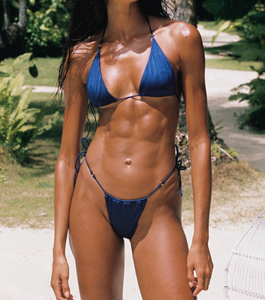 OEM / ODM
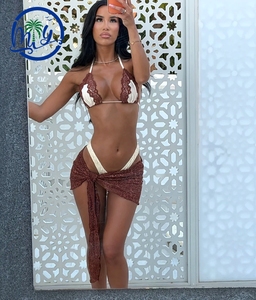 Resort 3-Piece
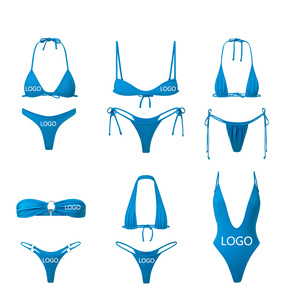 ECONYL® Base
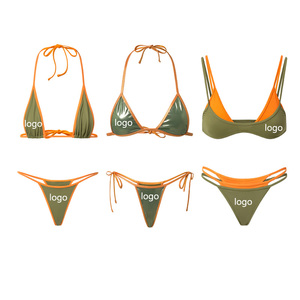 Retro High-Waist
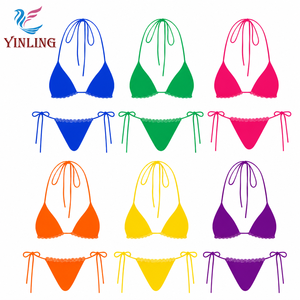 Modular Neck-Tie
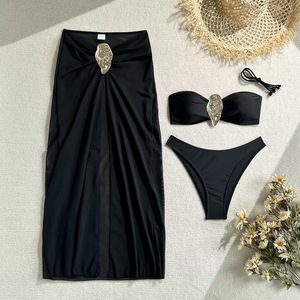 Appliqué Tech
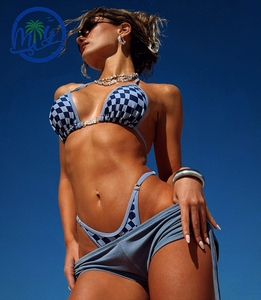 Sport-Leisure Cut
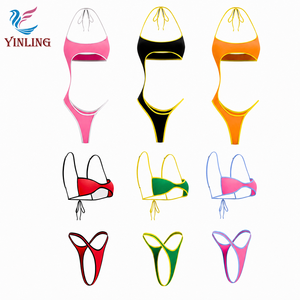 Fine Art Print
The Southern California Swimwear Imperative: Precision Halter Architecture
In the global epicenter of contemporary swim fashion—the expansive coastal basin stretching from Malibu and Venice Beach down to Newport and Laguna—the halter bikini serves as both an aesthetic benchmark and a technical challenge. Independent swimwear brands headquartered in the Los Angeles Fashion District, Silver Lake creative studios, and Orange County board-culture corridors require manufacturing partners who grasp the duality of the California market: uncompromising bohemian elegance paired with high-performance physical resilience.
Historically, swimwear labels sourcing halter silhouettes from conventional mega-factories in East Asia encountered structural disconnects. Generic grading systems developed for rigid mass-market apparel routinely fail the dynamic ergonomics required by coastal California consumers, who move seamlessly from open-water surfing and beach volleyball to rooftop pool clubs in West Hollywood. A halter top cannot merely look captivating on a mannequin; it must manage tensile cantilever dynamics around the cervical spine, distribute hydrostatic loads across the trapezius, and retain anatomical elasticity under exposure to extreme Pacific salinity, UV-A/UV-B irradiation, and hyper-chlorinated boutique hotel plunge pools.
Serving direct-to-consumer (D2C) founders, boutique apparel curators, and private labels across Southern California, Balidao Swimwear Co., Ltd. operates a vertically integrated, solar-powered facility that eliminates traditional overseas friction. By housing 2D CAD computerized pattern design, digital zero-water sublimation printing, precision laser cutting, artisan assembly, and rigorous ISO-aligned quality verification under one single roof, we deliver the agility of a localized DTLA sample room combined with the scalable commercial pricing of an advanced offshore manufacturing hub.
Localized Application Scenarios: Southern California Lifestyle Vectors
Designing and manufacturing halter bikinis for the Los Angeles demographic requires targeted segmentation based on micro-climates, cultural aesthetics, and functional demands.
Malibu & Venice: Active Wave Dynamics
Southern California's iconic point breaks demand athletic-grade structural containment. For Malibu and Venice beach labels, we engineer halter tops with reinforced internal under-bust shelf elastics using chlorine-proof Framilon® tapes. These elastics prevent upward displacement during wipeouts while maintaining a sleek, low-profile exterior. Twin underarm darting balances support without demanding heavy, water-retaining foam cups.
West Hollywood: Day-Club Transition
From private cabanas on Sunset Boulevard to Palm Springs pool weekenders, halter tops double as high-fashion outerwear. Los Angeles brands rely on our factory for high-luster finishes, including Italian Carvico high-shine nylon and crinkle textures, adorned with marine-grade 24K gold-plated zinc alloy stoppers, rings, and sliders. These halter sets effortlessly transition under sheer resort tunics or high-waisted denim for post-pool nightlife.
Desert Festivals: Modular Versatility
The Coachella Valley cultural calendar dictates a multi-functional approach to swimwear. Southern California labels require multi-tie convertible halter systems that can be styled crisscrossed, strapless bandeau, or traditional neck-tied. By implementing high-recovery elastane blends (minimum 22% Xtra Life LYCRA®), our swimwear retains memory without mechanical sagging across multi-day desert heat exposure.
Macro Sourcing Trends Reshaping the Los Angeles Apparel Ecosystem
Apparel executives and brand founders across Southern California are operating under unprecedented economic and regulatory transformations. Navigating these macro factors requires moving away from opaque, transactional cut-and-sew providers toward transparent, highly audited technical partners:
California SB 62 Impact
The Garment Worker Protection Act (SB 62) has fundamentally restructured DTLA cut-and-sew pricing, eliminating sub-minimum piece rates. Los Angeles brands now face local contract sewing costs exceeding $28–$35 per bikini set. Partnering directly with our ethical Bali facility offers complete wage compliance, BPJS healthcare transparency, and unit economics that sustain healthy retail gross margins (68–74%).
Circular Econyl® Standards
Greenwashing scrutiny from California consumers is at an all-time peak. Over 95% of the nylon textiles processed in our production lines originate from ECONYL® regenerated polyamide, sourced via certified Italian mills (Carvico and Jersey Lomellina). This enables brands to provide verifiable supply chain stories—converting discarded fishing nets and industrial waste into luxury swimwear.
Agile Low-MOQ Runs
Traditional mill minimums of 1,000 to 3,000 units per colorway create massive inventory obsolescence risks for independent LA brands. Our factory counters this through agile, low-MOQ frameworks: 100 units for Ready Design customization or 250 units for bespoke private label patterns, with zero minimum constraints across individual sizing splits (XS through XXL).
Zero-Water Sublimation
California water restrictions make domestic textile dyeing environmentally prohibitive. Our Bali facility utilizes closed-loop Japanese wide-format digital print technology with OEKO-TEX® Eco-Passport certified dye-sublimation inks. We achieve microscopic print detail with zero industrial wastewater discharge, passing strict Prop 65 chemical thresholds automatically.
Engineering Blueprint: Why Los Angeles Labels Build With Our Facility
A breakdown of our vertically integrated manufacturing capabilities engineered specifically to eliminate offshore production vulnerabilities.
| Engineering Stage | Generic Offshore Cut-and-Sew | Our Bali Solar Facility Specification | SoCal Commercial Advantage |
|---|---|---|---|
| CAD & Pattern Grading | Manual paper grading, prone to 10-15mm seam creep | Precision digital 2D CAD grading (ASTM D5585 standard) | Consistent fit continuity across XS to XXL runs |
| Fabric Portfolio | Unbranded generic polyester, quick degradation | Italian Carvico VITA (ECONYL®), 30+ colors in stock | Instant luxury hand-feel, zero fabric import waiting time |
| Hardware Finishing | Cheap nickel-plated iron, rusts within weeks | Solid zinc-alloy, salt-spray tested 72 hours (ASTM B117) | Corrosion-proof in Pacific salt water & chlorine |
| Energy Source | Coal/heavy grid dependency | Rooftop solar array generating 92 MWh/year | Substantiated carbon offset marketing claims for D2C |
| Packaging & Labeling | Scratchy woven tags, petrochemical polybags | Tagless soft heat-transfers + tapioca starch biopolymers | Zero skin irritation, 100% compostable packaging |
| Freight Logistics | Opaque sea freight via Port of Long Beach (35+ days) | Direct DHL Express air shipping direct to LAX (4-5 days) | Eliminates port congestion demurrage risks completely |
The Physics of Halter Engineering: Bust Scaffolding & Tensile Balance
Unlike standard bandeau or over-the-shoulder triangle tops, a halter bikini relies on an interconnected kinetic loop. The apex straps converge behind the neck, generating a diagonal upward vector, while the lower under-bust band exerts a horizontal anchor force. In lower-tier production, this results in three classic design failures:
1. The Cervical Load Imbalance
When cup volume increases without corresponding under-bust anchor reinforcement, the entire bust weight hangs directly from the cervical vertebrae. We resolve this by building hidden internal power-mesh cradles and wider lateral strap tunnels that distribute up to 60% of breast mass toward the torso rib cage, sparing the wearer's neck.
2. Apex Puckering & Edge Curling
Halter triangles often exhibit edge-roll where the lining peeks outward after exposure to water. Our sewing rooms deploy computer-calibrated 4-needle overlock stitching combined with blind edge-binding. The tension of the internal synthetic rubber cord is adjusted within a 0.5cN tolerance, guaranteeing a completely flat, non-gaping perimeter.
3. Hardware Degradation Under Salt Spray
Cheap metallic hardware oxidizes rapidly when exposed to Pacific salinity and hot tub ozone. Every ring, slider, and cord stopper in our halter catalog is forged from solid, lead-free zinc alloy, sealed with an electroplated clear coat that passes rigorous continuous salt-fog testing without pitting, discoloration, or skin sensitization.
Los Angeles Apparel Sourcing & Procurement FAQ
Comprehensive technical answers addressed directly to production managers, creative directors, and swimwear startup founders.
How does your factory ensure compliance with California Proposition 65?
California Proposition 65 enforces strict limits on hazardous substances, notably lead, cadmium, phthalates (DEHP, DBP, BBP), and formaldehyde in wearable consumer goods. All textiles supplied through our facility—including Italian Carvico fabrics and specialized Indonesian circular knits—hold certified OEKO-TEX® Standard 100 Class I designations. Furthermore, all metal accessories, stoppers, and underwires are lead-tested and nickel-free, eliminating the requirement for Prop 65 warning tags on your retail packaging and protecting your label from predatory legal actions in California courts.
Can we launch with our own custom halter design, or must we pick existing blocks?
We provide two distinct pathways. Our Ready Design (White Label) route allows you to select from dozens of pre-tested, production-ready halter bikini blocks—customized with your choice of 30+ stocked colors, exclusive digital prints, custom trims, and your branded heat-transfer labels—starting at just 100 units total. Alternatively, our Private Label (Custom OEM) route allows you to provide sketches, moodboards, or comprehensive tech packs. Our in-house 2D CAD pattern makers construct custom digital patterns, grade them across your size specifications, and output initial fitting prototypes within 10 to 14 days.
What are the exact logistics and customs procedures for shipping finished swim orders to Los Angeles?
We leverage daily air express consolidations through DHL Express directly out of Denpasar (DPS) to Los Angeles International Airport (LAX). Delivery times typically range between 4 to 5 business days from our factory floor to your warehouse or third-party logistics (3PL) fulfillment facility in Vernon, City of Industry, or Santa Ana. All shipments are accompanied by clean commercial invoices, standardized HTS apparel codes (typically under Chapter 61: knitted swimwear), and certificates of origin for streamlined US Customs and Border Protection clearance.
What is the sizing breakdown policy? Are we forced to buy equal quantities per size?
No. We operate with zero minimum order quantities per size. On an order of 100 pieces per style/color, you have the operational freedom to distribute the volume according to your historical customer data (e.g., 10x XS, 35x S, 35x M, 15x L, 5x XL). This prevents the inventory deadweight that plagues traditional apparel production, allowing California brands to protect cash flow and minimize end-of-season clearance markdowns.
How does unit manufacturing cost compare between a DTLA cut-and-sew contractor and your factory?
Due to California minimum wage increases and worker compensation mandates under SB 62, a DTLA contract sewing room charges between $22 and $35 per bikini set for cut-and-sew labor alone—excluding fabric, elastics, tags, and hardware sourcing. At our facility, a fully landed custom halter bikini set constructed with premium recycled Carvico VITA fabric, OEKO-TEX print, rust-proof hardware, custom heat-transfer labels, and individual biodegradable packaging generally falls in the $12 to $18 range depending on total volume. This substantial margin differential gives LA labels the capital headroom necessary for paid customer acquisition and omnichannel retail margins.
How does your sample review and fit refinement process operate remotely?
We eliminate remote development ambiguity through high-resolution fit session documentation. In addition to dispatching physical DHL counter-samples to your Southern California studio, our technical team provides multi-angle live fitting video reviews on professional dress forms and live models. Every seam tension measurement, cup curvature angle, and strap stretch tolerance is marked and cross-checked against your master CAD specifications before a single bulk cutting blade touches fabric.
Ready to Build Your Brand’s Next Signature Halter Collection?
Whether you require a rapid 100-piece capsule run using stocked Italian ECONYL® fabrics or full private label pattern development for a nationwide retail rollout, our team responds with comprehensive quote estimates within 24 hours.
Contact Us