Engineered OEM & ODM Showcase
Precision-graded swimwear silhouettes tailored for high-performance comfort, chlorine resistance, and forward-thinking aesthetics.
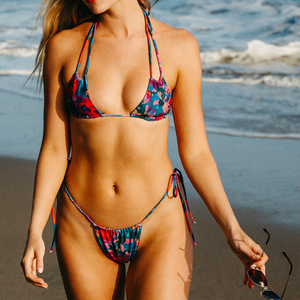
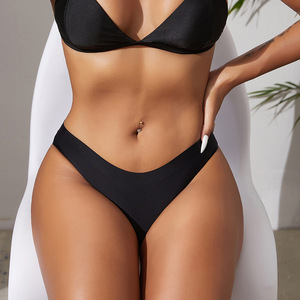

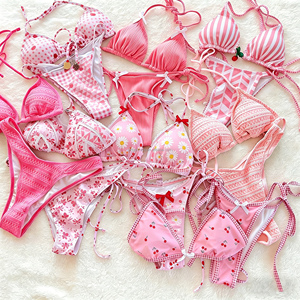
Luxury CustomLogo Women Printed Triangle Halter Bikini Set
Technical Specs
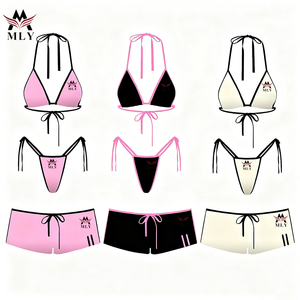
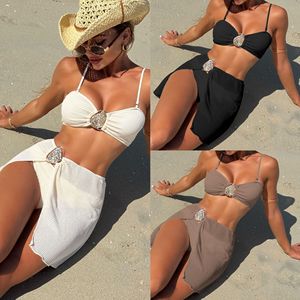
Women Solid Color Bikini 3-Piece Set with Cover-Up Short Skirt
Technical Specs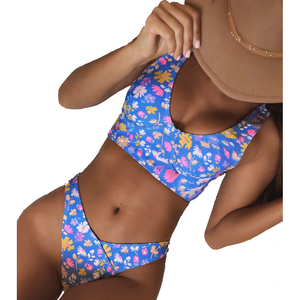
China's Swimwear Industrial Ecosystem: The Engineering Advantage
The global swimwear and beachwear market continues its rapid expansion, propelled by athletic lifestyle integration, digital direct-to-consumer expansion, and cross-over resort apparel trends. At the center of this transformation lies China's coastal industrial belt—predominantly concentrated across Xingcheng (Liaoning), Jinjiang/Quanzhou (Fujian), and the Greater Bay Area (Dongguan/Guangzhou). Xingcheng alone produces more than 25% of the world's swimwear, leveraging an end-to-end ecosystem where raw synthetic polymers, circular knitting mills, elastomeric development labs, and automated digital print houses operate within a 30-kilometer logistical radius.
For enterprise global buyers, private-label disruptors, and luxury resort apparel retailers, partnering with a leading Chinese bikini factory is no longer merely a low-cost arbitrage transaction; it is a collaborative exercise in advanced materials engineering, CAD pattern precision, and supply chain synchronization. Contemporary swimsuit manufacturing integrates complex warp-knitting machines with dual-axis tension feeding mechanisms, ensuring that micro-denier polyamides and elastanes maintain uniform elongation percentages across all size curves without torque distortion or seam tension failure.
Future Procurement Trends in Swimwear Manufacturing
Strategic purchasing managers must navigate technical disruptors, circular economy frameworks, and micro-batch procurement cycles to stay competitive.
1. Micro-Batch "Fast-Twitch" Replenishment
The era of rigid 3,000-piece production runs is ending. International retail procurement protocols have shifted toward 100 to 250-piece pilot runs. High-velocity replenishment lines utilize modular computerized single-needle workstations to execute on-demand colorway drops within 14 days, minimizing inventory depreciation and working capital stagnation.
2. Circular Polyamides & Traceable Regenerated Fibers
Sustainability has transitioned from a branding claim to a strict import mandate. Sourcing protocols now demand third-party verified materials like ECONYL® regenerated nylon, post-consumer PET bottles (Repreve®), and bio-based elastanes. Buyers mandate Global Recycled Standard (GRS) transactional certificates down to the polymer level, verified via QR digital product passports.
3. 3D Virtual Prototyping & Zero-Waste Patterning
By implementing CLO3D and Browzwear parametric body mapping, factories eliminate multiple physical sampling rounds. 3D simulation accurately projects true-to-life tension, hydro-drag, and cup molding over digital avatars, condensing typical 6-week development cycles into 72-hour digital approvals while boosting fabric yield up to 92%.
4. Hydrophobic & Bio-Barrier Functionalization
Functional swim apparel is capturing significant market share. Innovations include fluorocarbon-free (DWR) hydrophobic surface treatments that reduce water absorption to under 5% of garment dry weight, alongside multi-layer absorbent anti-microbial menstrual swim membranes tested to withstand 50+ wash-and-chlorine exposure cycles without delamination.
5. Thermal-Bonded Ultrasonic Seaming
To eliminate friction points and skin indentation, premium bikini production is adopting ultrasonic cut-and-bond technology paired with thermoplastic polyurethane (TPU) adhesive films. This creates completely stitch-free, flat-finish hems that yield a sleek, second-skin silhouette capable of resisting 50+ hours of hypersaline ocean water exposure.
6. Carbon Auditing & Zero-Discharge Dyeing
European and American regulatory bodies are introducing rigorous corporate sustainability due diligence directives. Forward-thinking Chinese factories are integrating rooftop photovoltaic solar generation, closed-loop water treatment systems, and supercritical CO2 waterless dyeing technologies, drastically reducing freshwater consumption and chemical oxygen demand (COD).
Product Architecture Evolution: From Beachwear to Crossover Athleisure
The physical silhouette of the contemporary bikini is experiencing a pronounced shift toward multipurpose crossover functionality. Consumer demand no longer isolates swimwear to beach lounging; swim garments are frequently paired with tailored blazers, linen resort wear, or worn as supportive sports bras for paddleboarding, yoga, and beachfront athletics.
| Performance Dimension | Conventional Swimwear (2015–2020) | Next-Gen Engineered Swimwear (2025+) | Commercial Value Driver |
|---|---|---|---|
| Fiber Composition | Standard Poly/Spandex (Non-recycled) | ECONYL®, Repreve®, GRS Certified Blends | Supports ESG compliance & premium retail margins |
| Chlorine / Sunscreen Resistance | Standard Elastane degradation (20-30 hrs) | LYCRA® Xtra Life™ (Up to 250+ hrs exposure) | Mitigates return rates due to fabric bagging/sagging |
| Seam Architecture | Standard 3-thread overlock with rubber ribbon | Framis Italian bonding, Framilon® TPU tape | Eliminates pinching, elevates luxury tactile handfeel |
| UV Protection Metric | Inconsistent UPF rating (Untested) | Certified UPF 50+ Broad-Spectrum Physical Blocking | Essential qualification for dermatology-approved lines |
| Hardware Metallurgy | Basic electroplated iron/plastic rings | Corrosion-proof, lead-free zamak & titanium alloys | Resists salt crystallization and oxidation staining |
As showcased in our Corset Bustier and Structured Underwire lines, pattern grading now integrates architectural interior scaffolding. Flexible resin boning systems distribute lateral bust tension across the ribcage, while double-molded spacer fabric bra cups retain breathability and hydrophobic properties, preventing water retention and ensuring rapid drying times.
Factory Infrastructure & Technical Capabilities
An enterprise-grade supply partner combining rigorous engineering standards with bespoke manufacturing agility.
Dual-Stage CAD Patterning & Grading
Our pattern master studio employs advanced Optitex and Gerber digitizing systems. Every pattern is mathematically graded across US, EU, AU, and Asian sizing matrix standards, preserving proportional cup depth, crotch coverage, and strap tension across XS to 4XL sizes.
In-House Inkjet & Direct-to-Fabric Print Studio
Operating high-speed Japanese Mimaki and Italian MS industrial dye-sublimation machinery. Using exclusively OEKO-TEX Eco-Passport certified disperse inks, we guarantee colorfastness under seawater, pool chemicals, and artificial perspiration up to ISO Grade 4.5.
End-to-End Quality Control (AQL 2.5/4.0)
Zero-subcontracting discipline ensures that 100% of fabric cutting, four-needle flatlock sewing, hardware assembly, and finished packaging stay within our solar-supported facility. Every bulk consignment is subjected to strict 4-point fabric inspection and needle detection.
Comprehensive Swimwear Procurement FAQ
Critical operational answers for brand directors, sourcing specialists, and supply chain analysts.
What is the minimum order quantity (MOQ) structure?
Our agile production tracks support custom private-label manufacturing from 100 pieces per style/color combination for white-label or existing base patterns, and 250 pieces for fully customized tech-pack developments. There are no size-specific minimums, empowering brands to map custom size breakdowns according to their regional demographic curve.
How do you handle color matching and print approvals?
We work with standardized Pantone Fashion, Home + Interiors (TCX/TSX) codes. For solid colors, lab dips are executed within 3–4 business days on your target fabric substrate. For custom patterns, we produce physical 1:1 strike-off fabric yardage for handfeel, stretch recovery, and color intensity verification prior to cutting bulk rolls.
What are the production lead times from sampling to dispatch?
Proto-samples and fit samples are completed in 3 to 5 business days using stocked raw materials, or 10–14 days when custom knits are requested. Bulk production cycles range between 4 to 6 weeks following pre-production sample (PPS) sign-off, with express door-to-door air freight dispatching worldwide via DHL/FedEx within 4–5 days.
Which compliance certifications does the facility maintain?
Our manufacturing complex maintains annual social and environmental audit certifications, including BSCI (Business Social Compliance Initiative), SMETA 4-Pillar, ISO 9001 for quality governance, and OEKO-TEX Standard 100 Class I (safe for direct skin contact). GRS scope certificates accompany all recycled yarn procurements.
How do you ensure hardware does not corrode or discolor?
All functional and ornamental hardware—including O-rings, sliders, G-hooks, and metallic logo pendants—are manufactured from lead-free zinc alloys or marine-grade stainless steel. They undergo 72-hour salt spray testing (ASTM B117 standards) to verify non-tarnishing, hypoallergenic, and nickel-free performance under prolonged UV and saline conditions.
Can you assist with complete custom branding and packaging?
Yes. Our turn-key finishing operations include high-elastic heat-transfer care labels (preventing abrasion), woven side seam tags, biodegradable tapioca or PLA polybags, FSC-certified hangtags, and embossed silicone hygiene protection liners applied during the final inspection pass.
Ready to Scale Your Swimwear Collection?
Initiate direct communication with our technical sales engineers, request our comprehensive fabric swatch catalog, or submit your tech pack for an immediate costing analysis.
Inquire Now